Worried About Ebola? Here’s How to Protect Yourself
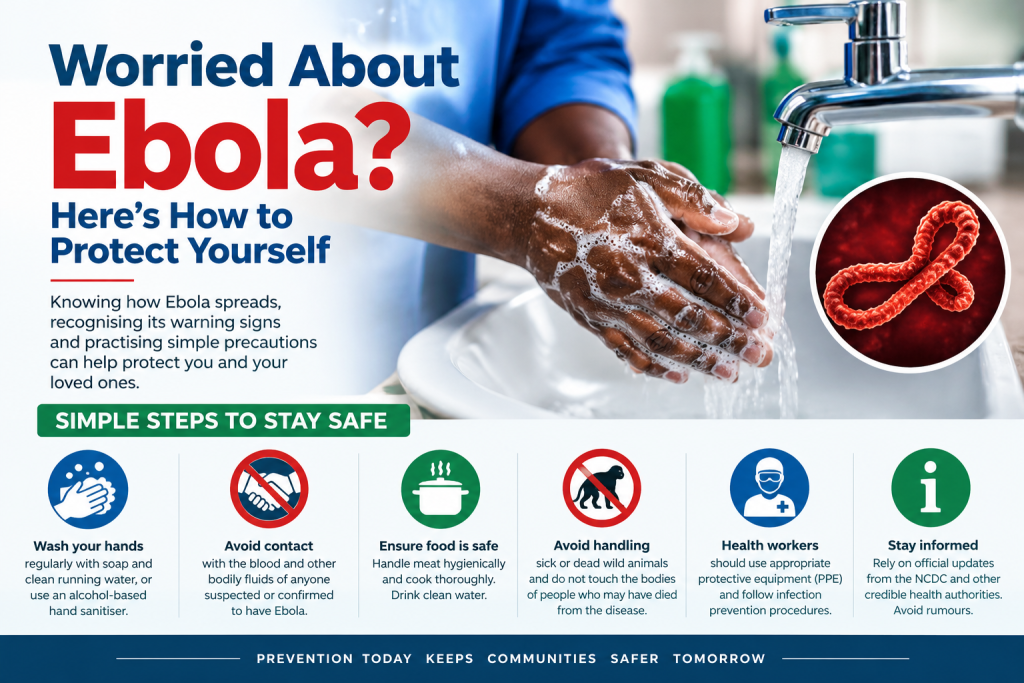
As concerns over Ebola grow following a reported case in Nigeria, knowing how the disease spreads and how to reduce the risk of infection is essential.
According to the Nigeria Centre for Disease Control and Prevention (NCDC), Ebola is transmitted through direct contact with the blood or other bodily fluids of an infected person who is showing symptoms. Contact with contaminated objects and infected animals can also pose a risk.
Know the Warning Signs
Symptoms usually appear between two and 21 days after exposure. They may include fever, headache, muscle pain, weakness, sore throat, vomiting and diarrhoea. Some patients may also develop bleeding.
These symptoms can occur with other illnesses, so they do not automatically mean someone has Ebola. However, anyone who develops compatible symptoms after a possible exposure should seek urgent guidance from health authorities.
Simple Ways to Stay Safe
Protecting yourself begins with everyday precautions:
Wash your hands regularly with soap and clean running water, or use an alcohol-based hand sanitiser.
Avoid contact with the blood and other bodily fluids of anyone suspected or confirmed to have Ebola.
Do not handle the bodies of people who may have died from the disease.
Safe handling and burial should be left to trained professionals.
Avoid handling sick or dead wild animals, and ensure meat is handled hygienically and thoroughly cooked.
Healthcare workers should follow recommended infection-prevention procedures and use appropriate personal protective equipment.
If you suspect exposure or develop symptoms, contact health authorities immediately for guidance. Avoid close contact with others while awaiting medical advice, and do not attempt to treat a suspected case at home.
Ebola: Facts Versus Myths
Ebola is not spread through the air like influenza or measles. Ordinary social contact, such as being in the same room with someone, does not by itself transmit the virus. The main risk comes from direct contact with infectious bodily fluids or contaminated materials.
Food and water are not recognised as ordinary routes of Ebola transmission, although food contaminated with infectious bodily fluids may pose a risk. Good hygiene and safe food preparation remain important.
Healthcare facilities also play a critical role in containing outbreaks through early identification, isolation, hand hygiene and appropriate protective measures.
Stay Informed, Not Afraid
Rumours and unverified messages can create unnecessary panic. Rely on official updates from the NCDC and other public health authorities, and share only information from credible sources.
When it comes to Ebola, awareness, early reporting and the right precautions can help protect individuals, families and communities.
Follow us for more news updates…
Author